Why Sunscreen Matters Every Day: A Beginner’s Guide
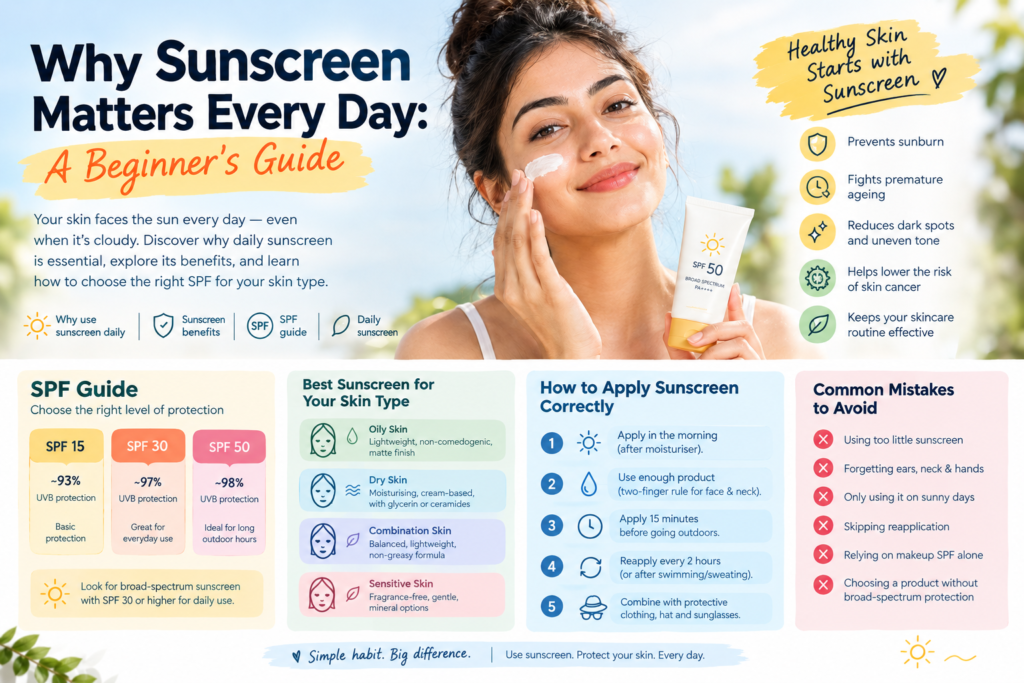
Why Sunscreen Matters Every Day: A Beginner’s Guide Taking care of your skin is not just about using a face wash, moisturiser, or serum. Protecting your skin from the sun is also an important part of a healthy skincare routine. Whether you are going to the office, attending college, shopping, or spending time outdoors, sunscreen helps protect your skin from harmful ultraviolet (UV) radiation. Many people believe sunscreen is necessary only during summer or on sunny days. However, UV rays can affect your skin throughout the year, even when the weather is cloudy. This is why understanding why use sunscreen daily is essential for anyone who wants to maintain healthy-looking skin. In this beginner’s guide, we will explain the importance of daily sunscreen, the major sunscreen benefits, how SPF works, and how to choose the right product for your skin type. Why Use Sunscreen Daily? Understanding why use sunscreen daily is the first step towards building a consistent skincare routine. Sunlight contains ultraviolet radiation, including UVA and UVB rays, which can affect your skin in different ways. UVA rays contribute to premature skin ageing, including fine lines, wrinkles, and uneven skin tone. UVB rays are a major cause of sunburn. Both types of UV radiation can contribute to skin cancer. Using sunscreen regularly helps reduce the amount of UV radiation reaching your skin. It is particularly important when you spend time outdoors, drive during daylight hours, or sit near windows that allow UVA rays to pass through. 1. Helps Protect Against Sun Damage One of the main reasons to use daily sunscreen is to help protect your skin from UV-related damage. Regular protection can reduce the risk of sunburn and help prevent some of the long-term effects of sun exposure. 2. Helps Prevent Premature Ageing Repeated exposure to sunlight can contribute to wrinkles, fine lines, and a loss of skin elasticity. Applying sunscreen consistently helps protect your skin from UV damage that contributes to premature ageing. 3. Helps Reduce Uneven Skin Tone Sun exposure can worsen pigmentation and dark spots in some people. Sunscreen helps protect the skin from further UV-related pigmentation, making it an important part of a skincare routine for people concerned about uneven skin tone. 4. Supports Long-Term Skin Health Daily sun protection is a simple habit that can benefit your skin over time. When combined with gentle cleansing, moisturising, and other suitable skincare practices, sunscreen supports a more complete skin protection routine. What Are the Main Sunscreen Benefits? The sunscreen benefits go beyond protecting your face from sunburn. A suitable sunscreen can help protect the skin from several effects associated with UV exposure. Here are some important sunscreen benefits to understand: Protection from UV radiation: Broad-spectrum sunscreen helps protect against both UVA and UVB rays. Reduced risk of sunburn: Applying sunscreen correctly helps lower the chance of sunburn. Support against premature ageing: Regular use helps reduce UV-related skin damage that contributes to wrinkles and fine lines. Help with pigmentation management: Sunscreen can help prevent existing dark spots from becoming darker due to sun exposure. Skin cancer prevention: Regular sunscreen use, as part of a comprehensive sun-protection routine, helps reduce the risk of certain skin cancers. These sunscreen benefits make sunscreen an important daily skincare product for adults and children. However, sunscreen is not a complete shield against the sun. Seeking shade, wearing protective clothing, and avoiding excessive sun exposure remain important. Daily Sunscreen: How to Make It Part of Your Routine Using daily sunscreen becomes easier when you include it in your regular morning skincare routine. You do not need a complicated collection of products to get started. Follow these simple steps to use daily sunscreen effectively. Step 1: Cleanse Your Face Start by washing your face with a gentle cleanser that suits your skin type. This helps remove excess oil, sweat, and impurities. Step 2: Apply Moisturiser If your skin needs extra hydration, apply a suitable moisturiser before sunscreen. People with dry skin may prefer a richer moisturiser, while those with oily skin may prefer a lightweight formula. Step 3: Apply Sunscreen Generously Apply broad-spectrum sunscreen with SPF 30 or higher to exposed skin. Do not forget commonly missed areas, such as your ears, neck, hairline, and the backs of your hands. Step 4: Apply It Before Sun Exposure Follow the product label. Many sunscreens should be applied about 15 minutes before going outdoors. Step 5: Reapply When Needed Reapply sunscreen approximately every two hours while outdoors and after swimming, sweating, or towel-drying, following the product instructions. Remember that daily sunscreen is important even when the weather is cloudy. If you spend most of your day indoors, your exposure will depend on factors such as sunlight entering through windows and whether you go outside. SPF Guide: Understanding Sun Protection Factor Choosing sunscreen can feel confusing because products come with different SPF numbers, including SPF 15, SPF 30, SPF 50, and SPF 50+. This beginner-friendly SPF guide explains what these numbers mean and how to choose a suitable product. SPF stands for Sun Protection Factor. It primarily indicates protection against UVB-related sunburn under standard testing conditions. It does not tell you everything about a sunscreen’s UVA protection, which is why choosing a broad-spectrum product is important. SPF 15 vs SPF 30 vs SPF 50 SPF Level Approximate UVB Radiation Filtered Under Test Conditions SPF 15 About 93% SPF 30 About 97% SPF 50 About 98% These figures apply under controlled testing conditions and do not guarantee the same level of protection in everyday use. Applying too little sunscreen or failing to reapply can significantly reduce protection. For everyday use, dermatology guidance commonly recommends a broad-spectrum sunscreen with SPF 30 or higher. What Does Broad-Spectrum Mean? Broad-spectrum sunscreen protects against both UVA and UVB radiation. This matters because UVB rays are strongly associated with sunburn, while UVA rays contribute to premature skin ageing and also play a role in skin cancer. When comparing products, check for a broad-spectrum label and follow the manufacturer’s instructions. Is SPF […]