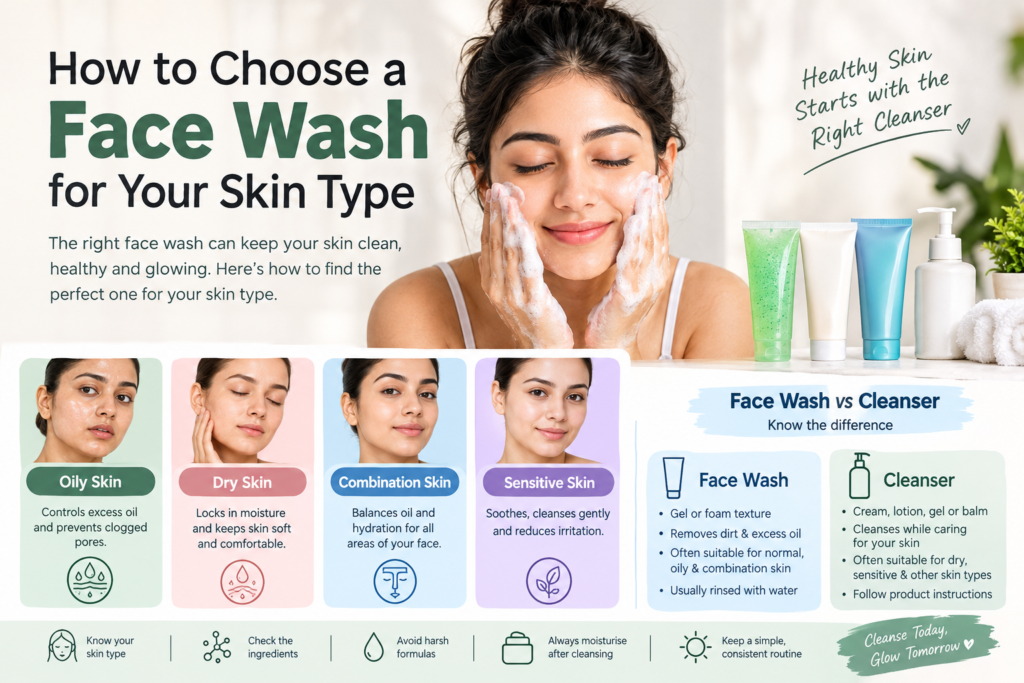
How to Choose a Face Wash for Your Skin Type
Choosing the right face wash is an important step in maintaining healthy, clean, and fresh-looking skin. With so many skincare products available, finding the right product for your needs can be confusing. Some products are designed to control excess oil, while others help maintain moisture and prevent dryness. Understanding your skin type can help you choose the best face wash for your daily skincare routine.
If you are searching for a face wash for skin type, this guide will help you understand how to select a suitable product for oily, dry, combination, and sensitive skin. You will also learn the difference between a face wash and a cleanser and discover simple tips for keeping your skin clean and comfortable.
Why Is Choosing the Right Face Wash Important?
Your face is exposed to dust, sweat, pollution, excess oil, and other impurities throughout the day. Washing your face helps remove these substances and keeps your skin feeling fresh. However, using the wrong product may leave your skin feeling tight, dry, irritated, or excessively oily.
A suitable face wash should clean your skin without removing too much of its natural moisture. The best choice depends on your skin type, daily activities, and individual skincare needs.
Before purchasing a product, consider its ingredients, texture, fragrance, and how your skin reacts after use.
1. Face Wash for Oily Skin
Oily skin produces excess sebum, which can make the face look shiny and contribute to clogged pores and acne. If your skin becomes oily shortly after washing, you may benefit from a gentle face wash formulated for oily skin.
What to Look For
When choosing a face wash for oily skin, consider the following ingredients and product features:
Salicylic acid: Helps exfoliate inside pores and may reduce clogged pores and acne.
Niacinamide: Can support the skin barrier and help improve the appearance of excess oil.
Gentle cleansing ingredients: Remove dirt and excess oil without excessively drying the skin.
Lightweight formulas: Gel-based face washes may feel comfortable on oily skin.
What to Avoid
Avoid very hot water, harsh soaps, and products that consistently leave your skin feeling tight or irritated. Strong exfoliating ingredients may also be unsuitable for frequent use if your skin is already dry or sensitive.
Tip: After cleansing, apply a moisturiser while your skin is still slightly damp. This helps retain moisture and keeps your skin feeling soft.
3. Face Wash for Combination Skin
Combination skin usually has an oily T-zone, including the forehead, nose, and chin, while the cheeks may feel normal or dry.
Choosing the right product can be challenging because different areas of your face have different needs.
What to Look For
A gentle, balanced cleanser suitable for daily use.
Ingredients that cleanse without stripping away too much moisture.
A formula that does not leave dry areas feeling tight.
A lightweight product that rinses off easily.
You may not need separate face washes for different parts of your face. Start with one gentle product and observe how your skin responds.
Tip: Use a moisturiser suited to your skin’s needs, applying a little more to dry areas if necessary.
4. Face Wash for Sensitive Skin
Sensitive skin may react to skincare products with redness, itching, burning, or irritation. If this sounds familiar, choose products with simple formulas and avoid unnecessary irritants.
What to Look For
Fragrance-free formulations.
Mild cleansing ingredients.
Products labelled for sensitive skin.
Moisturising ingredients such as glycerin.
Avoid rough scrubs and products containing ingredients that have previously caused irritation. Remember that even a product labelled as gentle can cause a reaction in some people.
Tip: Patch-test a new product on a small area before adding it to your daily routine. If irritation persists, consult a dermatologist.
Face Wash vs Cleanser: What Is the Difference?
A face wash and a cleanser both help remove dirt, oil, sweat, and other impurities, but they can differ in texture and formulation.
A face wash is often a gel or foaming product that is rinsed off with water. A cleanser may come in cream, lotion, gel, or other forms and can be formulated to provide a gentler cleansing experience.
Here is a simple comparison:
Feature Face Wash Cleanser Common texture Gel or foam Cream, lotion, gel, or balm Main purpose Remove dirt and excess oil Clean skin while meeting different skin needs Often suitable for Normal, oily, and combination skin Dry, sensitive, and other skin types How to use Usually rinsed with water Depends on the product instructions These categories overlap, so the product’s ingredients and formulation matter more than its name. For example, a gentle foaming cleanser may work well for some people with dry skin, while a cream cleanser may suit some people with oily skin.
How to Choose the Best Face Wash for Your Skin Type
Follow these simple steps before buying your next skincare product.
Step 1: Identify Your Skin Type
Observe how your skin feels after gentle cleansing. If it becomes shiny quickly, it may be oily. If it feels tight or flaky, it may be dry. If some areas are oily and others dry, you may have combination skin.
Step 2: Read the Ingredients
Look for ingredients that match your skin’s needs. Salicylic acid may help with clogged pores, while glycerin and ceramides can help support hydration and the skin barrier.
Step 3: Consider Your Skin Concerns
Think about whether you want to manage excess oil, dryness, clogged pores, or sensitivity. Choose a product designed for your main concern without adding too many active ingredients at once.
Step 4: Check the Product Label
Look for clear ingredient information and follow the manufacturer’s directions. If you have sensitive skin, consider fragrance-free options and patch-test new products.
Step 5: Observe Your Skin’s Response
After using a new product, notice whether your skin feels comfortable. Persistent tightness, redness, burning, or itching may indicate that the product is unsuitable for you.
Common Face Wash Mistakes to Avoid
Even a good skincare product may not work well if you use it incorrectly. Avoid these common mistakes:
Washing your face too frequently.
Using very hot water.
Scrubbing your face aggressively.
Choosing products only because they are popular.
Ignoring moisturiser after cleansing.
Using several strong active ingredients without considering your skin’s tolerance.
Expecting a face wash alone to solve every skin concern.
A simple and consistent skincare routine is often a better starting point than using too many products.
Frequently Asked Questions
1. Which face wash is best for my skin type?
The best option depends on your skin’s needs. Gel-based products may suit oily skin, while cream-based or moisturising formulas may feel more comfortable on dry skin. Sensitive skin generally benefits from gentle, fragrance-free products.
2. Can I use the same face wash every day?
Yes, if the product is suitable for your skin and does not cause irritation. Follow its instructions and adjust your routine if your skin becomes uncomfortable.
3. Is a cleanser better than a face wash?
Neither is automatically better. Both can clean your skin effectively. Choose according to the formulation, your skin type, and your personal preference.
4. Can a face wash remove pimples and dark spots?
A face wash containing salicylic acid may help with clogged pores and certain acne concerns. However, a face wash alone usually cannot remove all pimples or dark spots. Persistent acne or pigmentation may require additional skincare or professional advice.
5. How often should I wash my face?
For most people, washing twice daily and after heavy sweating is a reasonable starting point. If your skin is very dry or sensitive, you may need a gentler routine.
Conclusion
Choosing the right face wash begins with understanding your skin type. Whether you need a face wash for oily skin, a face wash for dry skin, or a gentle cleanser for sensitive skin, focus on ingredients, formulation, and how your skin responds.
When searching for a face wash for skin type, remember that the most expensive or popular product is not necessarily the best one for you. Choose a gentle formula, avoid harsh cleansing habits, moisturise regularly, and maintain a consistent skincare routine.
Healthy-looking skin starts with simple habits and products that suit your individual needs. Take time to understand your skin, make informed choices, and adjust your routine whenever necessary.
Selecting an appropriate face wash is essential for maintaining optimal skin health. It is imperative to identify your skin type—whether oily, dry, combination, or sensitive—before making a selection. Look for formulations that cater specifically to your skin’s needs, as this can enhance cleansing efficacy while minimizing irritation. Prioritizing gentle ingredients and avoiding harsh chemicals will contribute to a balanced complexion.